kedros katikies

kalamaki heraklion


The village of Kalamaki is located on the south coast of central Crete, on the Messara Bay. It is a small place that always kept a very friendly, familial atmosphere.
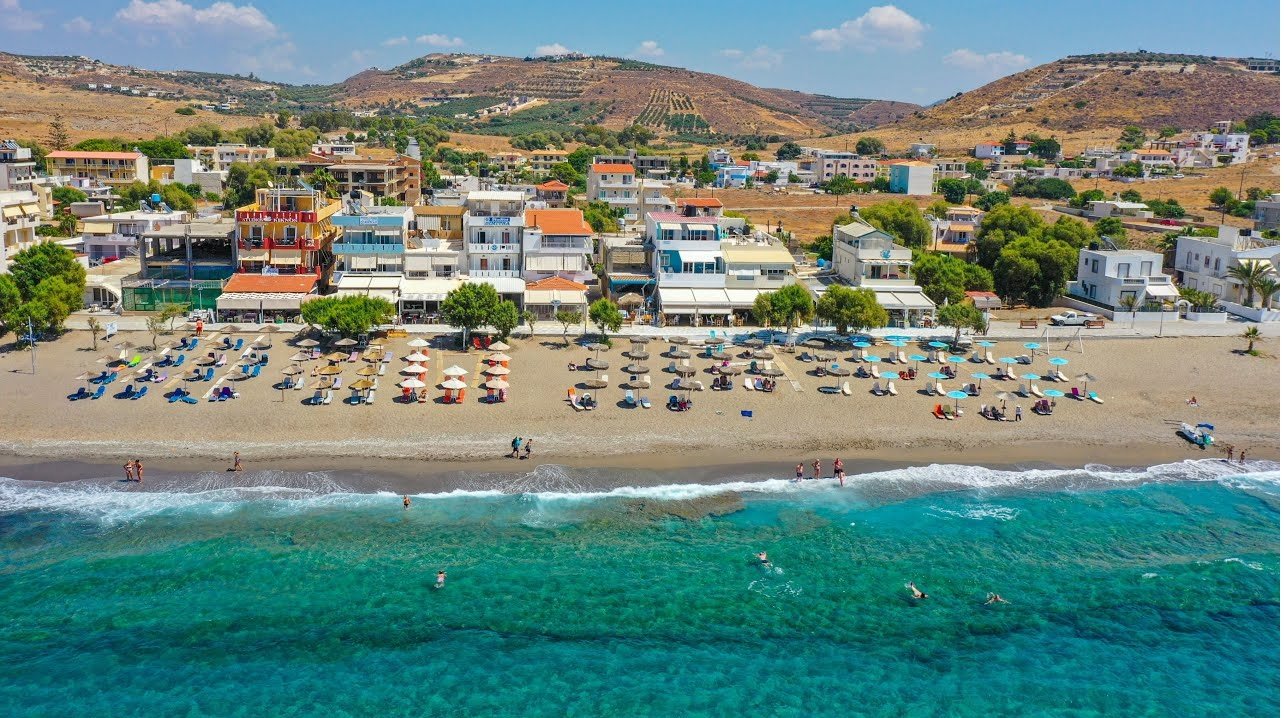
It is thus an ideal place to make restful holidays, far away from noise and near to the sea… On Kalamaki beach, you will find cafeterias and restaurants offering umbrellas and sun beds.
Kalamaki village includes everything you might need during your holidays, including minimarkets, souvenir shops, rental cars and bikes, etc. Besides, banks, weekly traditional market, health centre and all kinds of shops can be found in nearby towns of Timbaki and Mires (8 and 15 km from Kalamaki).
Kalamaki

The village of Kalamaki is located on the south coast of central Crete, on the Messara Bay. It is a small place that always kept a very friendly, familial atmosphere. It is thus an ideal place to make restful holidays, far away from noise and near to the sea… On Kalamaki beach, you will find cafeterias and restaurants offering umbrellas and sun beds. Kalamaki village includes everything you might need during your holidays, including minimarkets, souvenir shops, rental cars and bikes, etc. Besides, banks, weekly traditional market, health centre and all kinds of shops can be found in nearby towns of Timbaki and Mires (8 and 15 km from Kalamaki).
Kalamaki matala

Places worth visiting

Matala

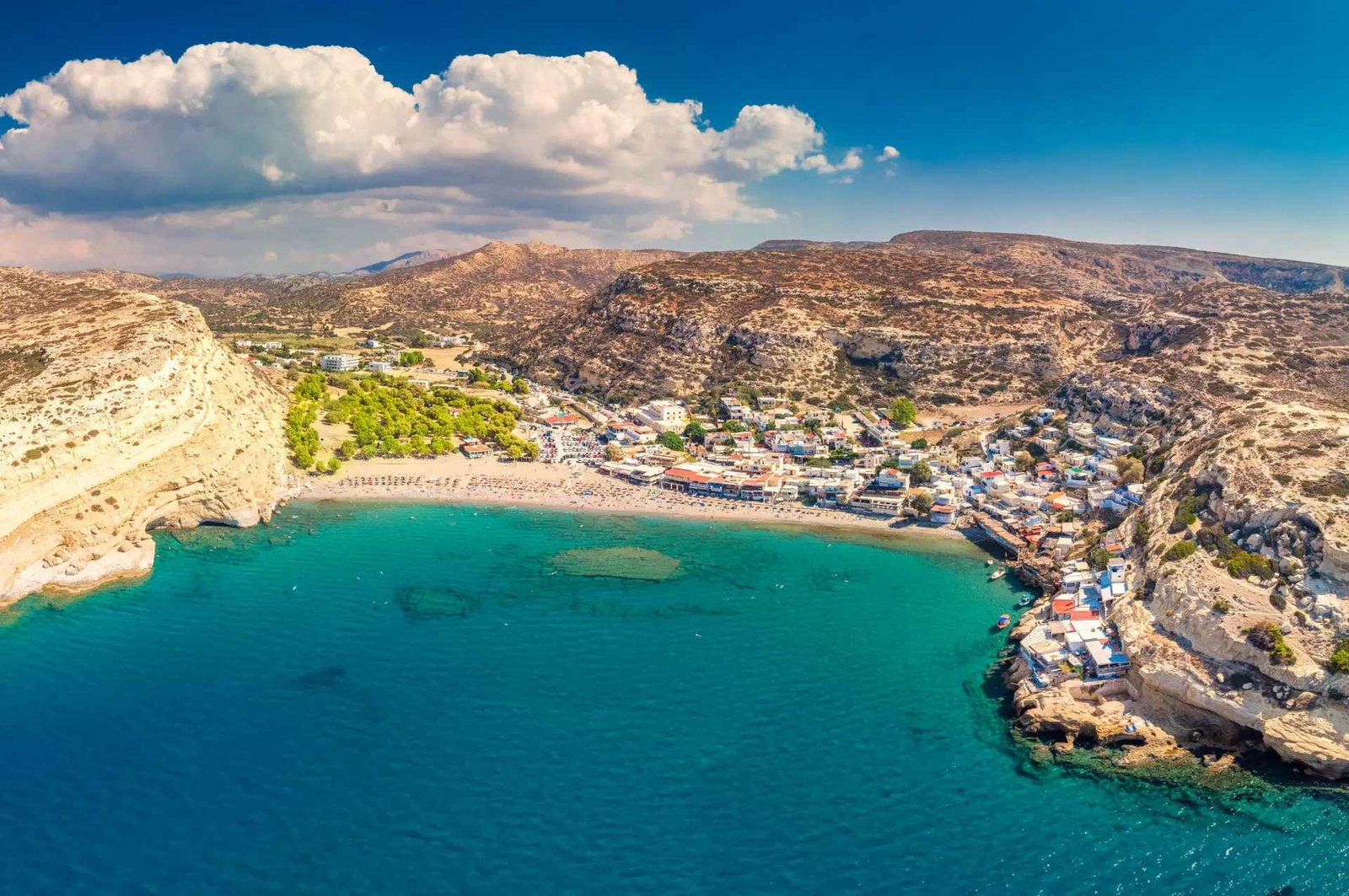
Matala is located 68km southwest of Heraklion, on the boundaries of the plain Messara and Asteroussia Mountains. It is one of the most popular tourist destinations of Crete and certainly the most famous beach of Heraklion. It is famous for the carved caves in the rocks and the hippies of the ‘70s. It is located close to Phaestus, the second largest palace of the Minoan civilization. Matala was the port of Phaestus, and on the Roman Times, it became a port of Gortys.

Matala is located at the exit of a small valley, which forms a large enclosed bay with nice view to the islands of Paximadia.The bay is a beautiful long sandy beach, 300m long, with fine gravel and crystal clear deep water. Moreover, the seabed is quite rocky in some places and the waves, due to frequent westerly winds, are very large and amazing. Furthermore, there is a huge cave on the north part of the beach, from the top of which some “crazy” people splash in the water. The beach is very well organized with umbrellas, toilets, showers, lifeguard, first aids, beach volley courts, snack bars, water sports, excursion boats, etc.

Phestos Palace

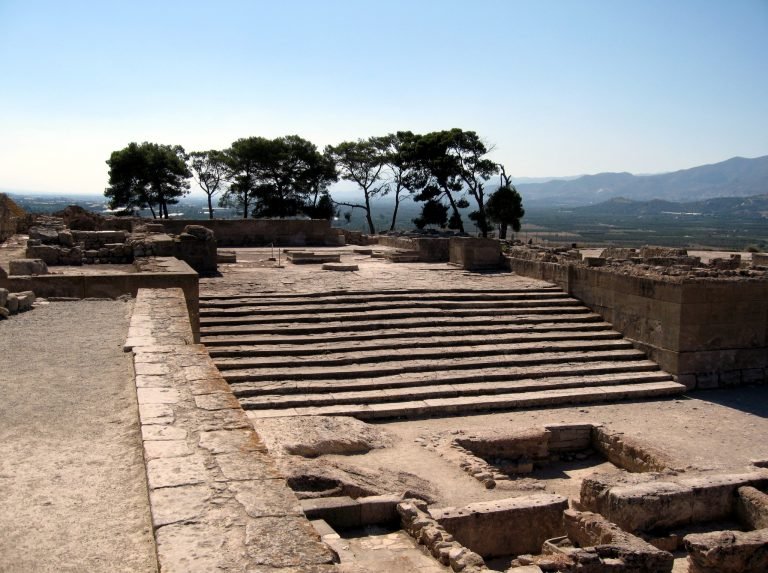
Phaestus (Phestos or Festos) was a Minoan city on Crete, the ruins of which are located 55km south of Heraklion. The city was already inhabited since 6000BC and prospered concurrently with the city of Knossos, till the 1st century BC.

Phaestus is famous for its Minoan palace, which is a visitable archaeological site and receives thousands of visitors every year. The palace of Phaestus was built on a low hill in the plain of Messara, with panoramic views to the surrounding area. It is the second largest after Knossos and occupies an area of ​​18 acres.

The palace of Phaestus was built in about 2000BC, according to the legend, by Minos. The palace’s king was the brother of Minos, the mythical Rhadamanthys. Rhadamanthys was second son of Zeus and Europe and was known for his righteousness. Indeed, he is considered the writer of the Cretan Code, the first standards of Justice, which was later adopted by the Spartans. Due to his fairness, after his death, he was assigned as a judge in Hades (like his brother Minos).

Agiofaraggo

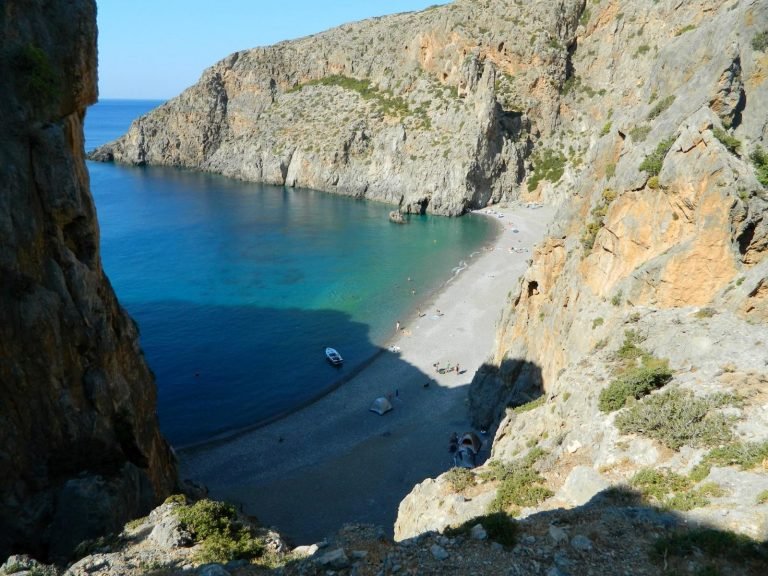
The beach of Agiofarago is located about 80km south of Heraklion city, at the exit of the homonym Gorge of Agiofarago. To get there you must either cross the gorge, by easy hiking of about 30-50’, or catch a boat from Matala, Agia Galini, or Kali Limenes. We definitely recommend the first option, as the route within the vertical walls of the gorge is breathtaking. On the way you will see the large caves were some hermits still live and the chapel of St. Anthony, with a well outside.

The beach at the exit of the gorge is stunning, with fine pebbles and clear blue waters, which are usually very calm. West of the beach a beautiful arch is formed, beneath which you can swim. Vertical cliffs surround the beach, on where you might see hermits praying. Nudism is not allowed here, like in all religious places of Crete. The beach is ideal for camping, but you must carry all your stuff in the gorge. However, you can ‘gain’ some weight if you do not take water with you, but collect it from the well in front of the chapel, located just 5’ away from the beach. You could also wash yourself there (without shampoo!). Next to the well there is a trough from where goats drink water. If you have time fill it with water and many goats will come to drink, thanking you!

Kommos

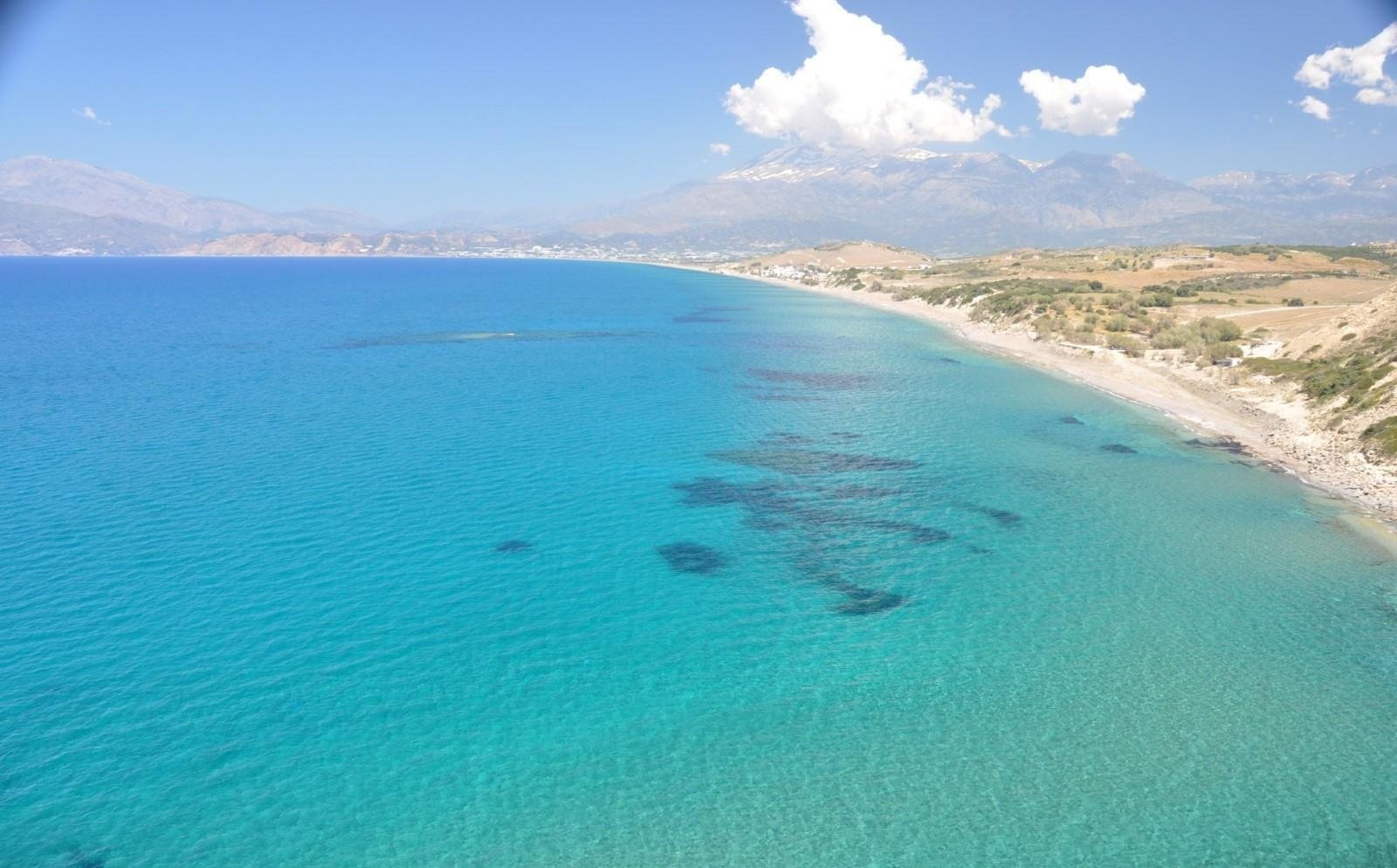
Komos is located 66km southwest of Heraklion, just 2km north of Matala and close the village Pitsidia. It is actually the southernmost and the most isolated part of the long beachfront of Messara Bay. You can access Kommos by driving in the road heading to Matala, till you see a sign to Kommos near Pitsidia.

The views to Paximadia islets is stunning, especially during sunset. There are only a few tamarisk trees around, not buildings, because Kommos is a protected archaeological area and building is restricted. Next to the archaeological site, on the south, there is an organized beach with umbrellas, sun beds, toilet, showers, a canteen and a lifeguard. All around there are sand dunes where you can admire the white lilies of sand, which sign the end of the summer. If you want to find a place to stay overnight or to eat, you can walk to the nearby Kalamaki, or drive to Pitsidia and Matala.